
Leather, Lace, and Liberation; The Relationship Between Sexy Fabrics and Modern Concepts of Power
Written by: August Ervin
Styled by: August Ervin with assistance from Skylar Schrage
Photographed by: Isa Oliver
Makeup by: August Ervin
Modeled by: August Ervin, Draco Richardson, Taylor Tipton, and Ralen Hume
Think of your childhood crush. What were they wearing?
Was it a superhero or supervillain? Was it Batman or Nightwing? Catwoman? Wonder Woman? One of the X-Men or Avengers? Was it a cartoon character? Maybe Shego from Kim Possible? Jem and the Holograms? The Hex Girls? That goth girl from Danny Phantom? Danny himself?
What about Jessica Rabbit? Or Esmeralda from Disney’s Hunchback of Notre Dame?
Did they have big leather boots? Maybe the whole outfit was leather? Was it a shiny satin or velvet dress? Was part of their outfit sheer or lacy? Have you ever wondered why those characters everyone ends up crushing on wear those fabrics?
Let’s talk about it: all of these fabrics have sensual connotations and direct links to social concepts of power, purity, sexuality, and femininity.
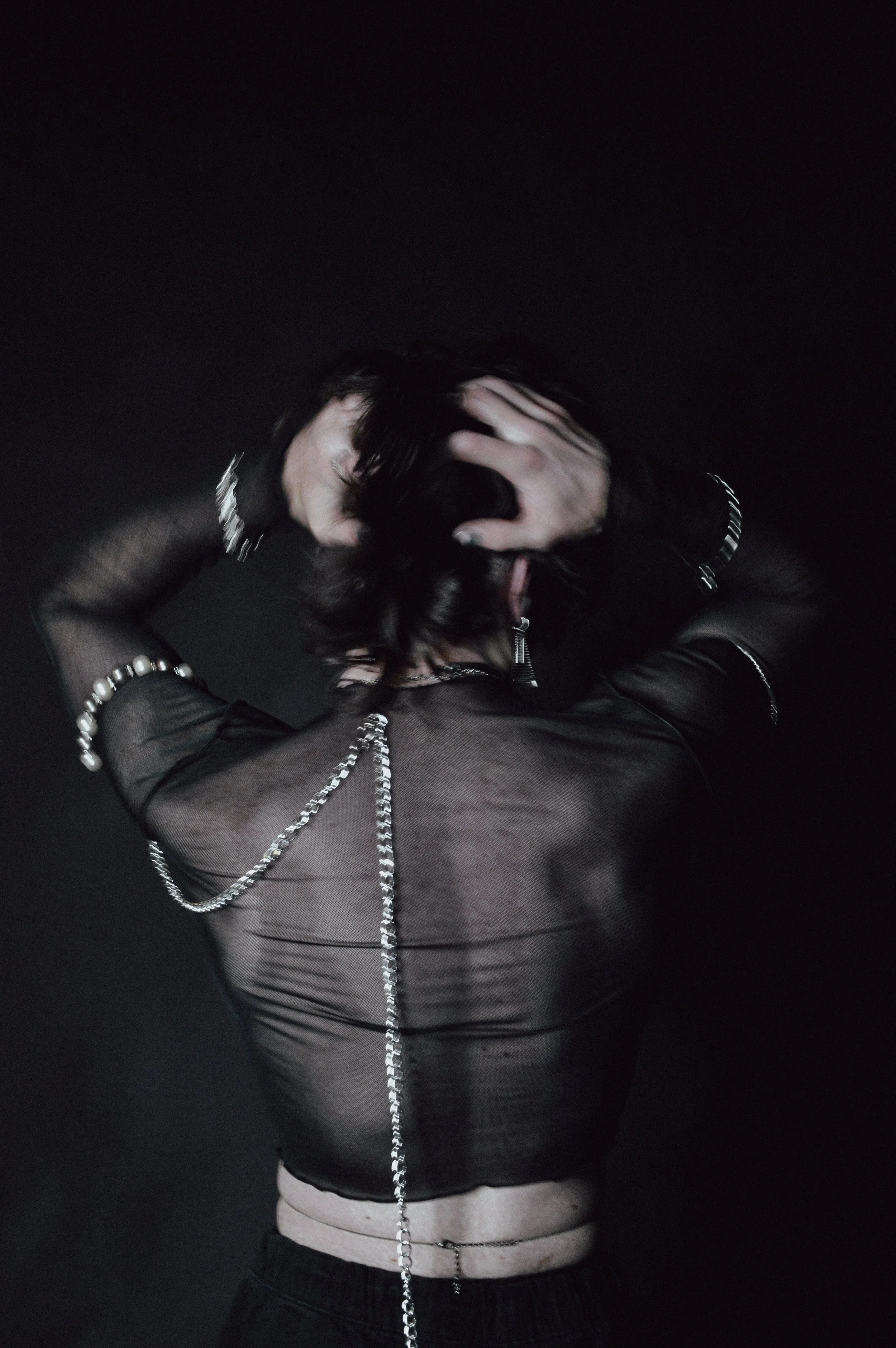
Leather
I’d bet that when you think of leather, you think of Catwoman, with the full-body leather catsuit. You probably also think of tall leather boots and bad boys with leather jackets. A lot of the social perceptions of leather come from the military history of leather literally being used as armor. It's strong, impenetrable. This creates a link between leather and concepts of power and dominance. Since the ‘50s, leather has been adopted by rebellious movements. Punks, goths, and many other communities have adopted leather jackets, pants, collars, cuffs, boots, etc. and covered them in chains, spikes, and patches. These leather clothes serve as a rebellion to the expectation that the working class should submit to the elite, that women should submit to men, etc., while still serving the purpose of being armor in high-stakes protests. This history all comes together to create a fabric that represents dominance, strength, persistence, rebellion, and, through those things, sexuality.

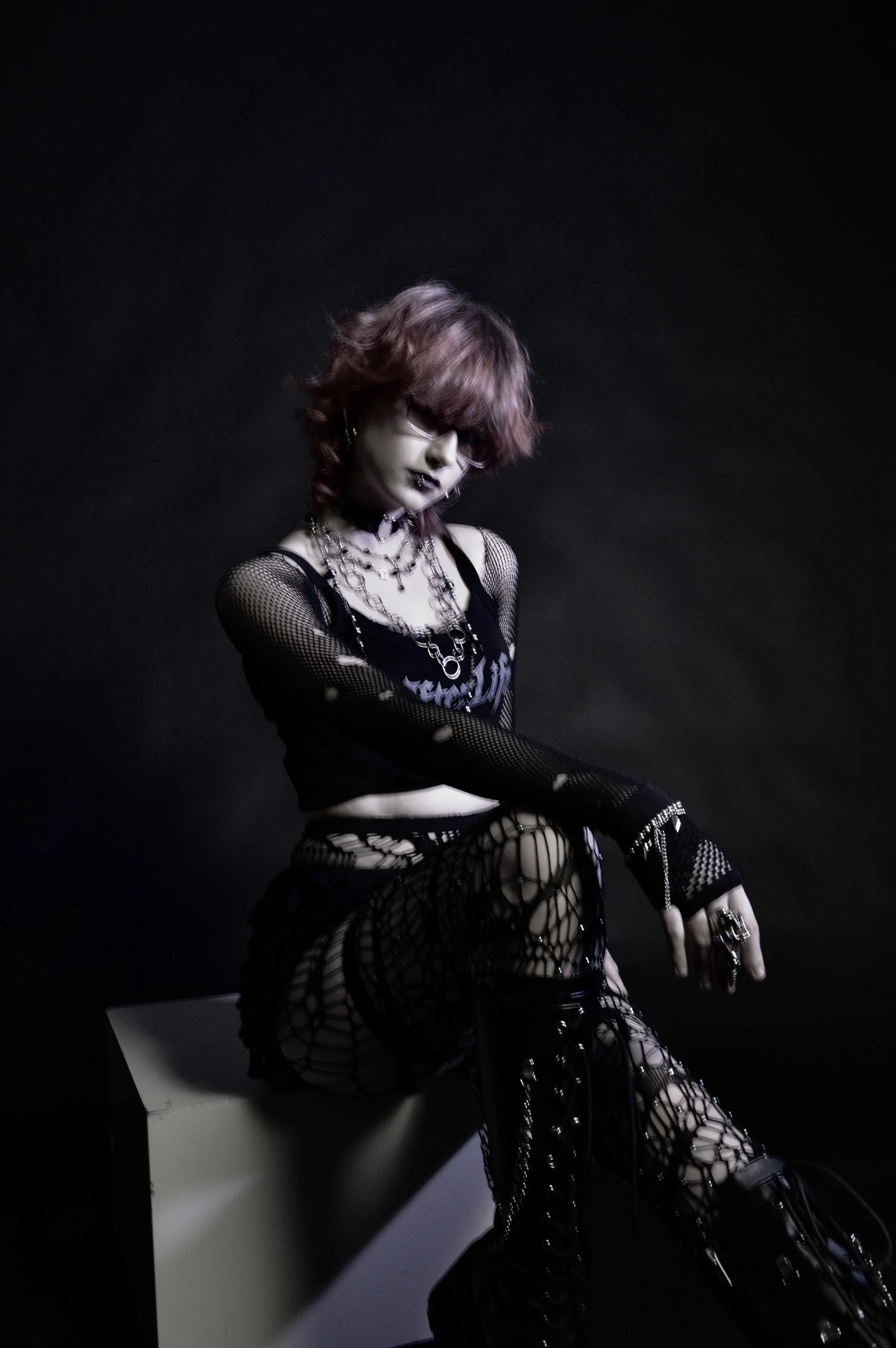


Lace
"The ultimate beauty of sexy and complicated’ has always been the pronoun of lace, beautiful and romantic”. The beauty context of lace starts with its origins. Lace was a status symbol. Large sheets of intricately woven lace were expensive to make and and even more expensive to make clothing from. It was delicate and fragile, which meant it wouldn’t stand up to daily wear for the working class.
Madame De Pompadour, in the 18th century, adored lace. She popularized it as a symbol of beauty and femininity. You’ve probably seen paintings of her covered in layers and layers of pleats, ruffles, and frills made from the delicate fabric. After Madame De Pompadour, lace became a little easier to make, more affordable, and eventually became really popular in making undergarments. The Victorians, known for being deeply conservative and hush-hush about all things under, started to see lace as inherently sensual. Then we get Can Can dancers, flashing lacy stockings and garters, and flappers in the 1920s wearing lace on the outside of their clothes. Now, in 2026, we still hear the echoes of those historical sentiments. Lace is still pretty synonymous with femininity, sensuality, seduction, delicacy, and playfulness.


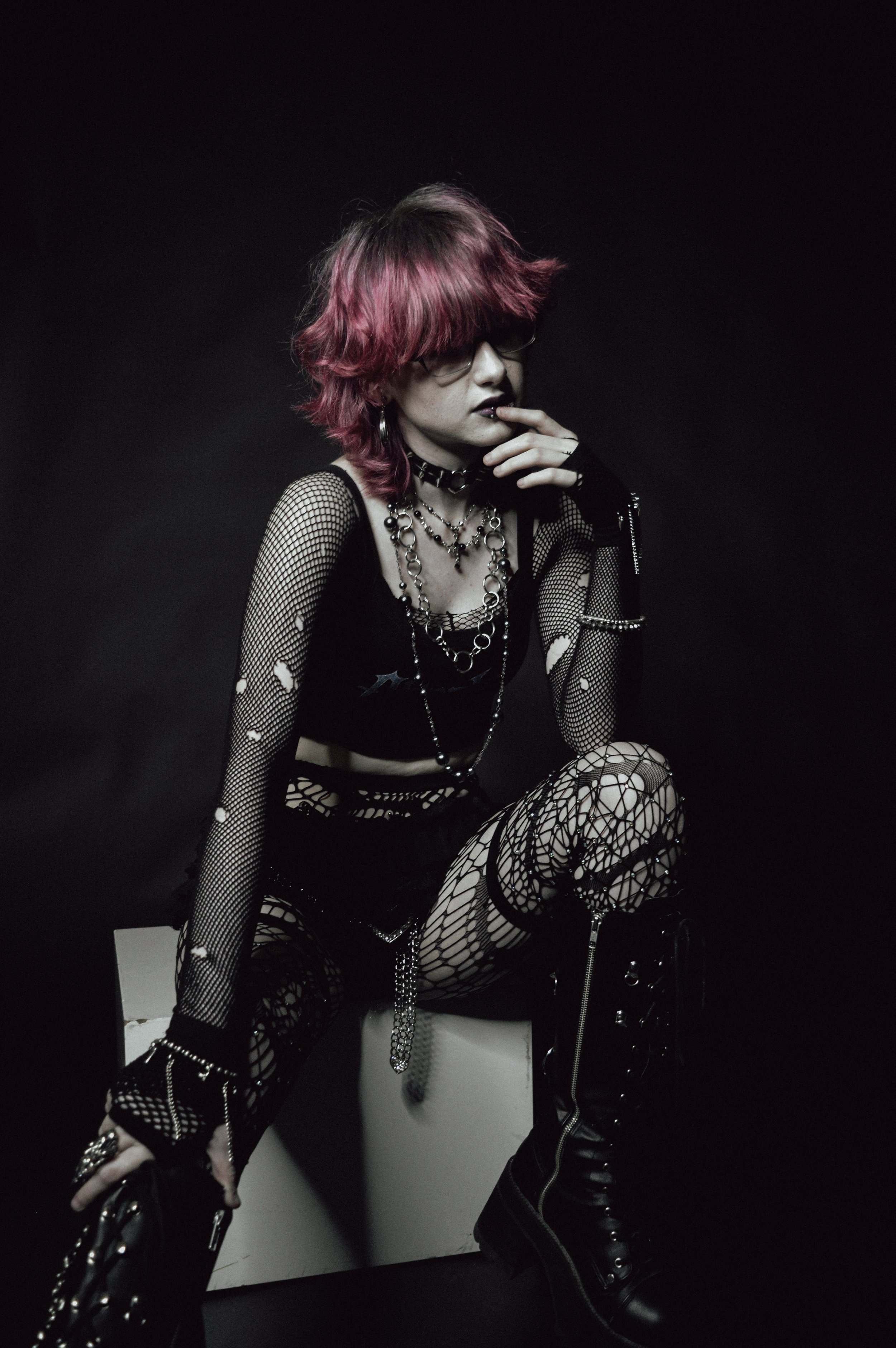

Satin and Silk
I’m sure you don’t need a history lesson to understand how we started to see silk and satin as sexy. You only need to see it draped over the human form. That said, I’m gonna give the history lesson anyway. It started with the Silk Road. Silk was expensive, which made it a status symbol. Silk made its way to Rome, where it quickly became a symbol of seduction and temptation. This symbolism in Roman art, poetry, and sculpture was a major influence on the artists of the Renaissance and beyond. Satin doesn’t have this deep history but does share it, being a weaving technique that mimics the flow, shine, and drape of silk. Satin made the look, feel, and sensuality of silk more affordable. The draping of these fabrics, barely touching the body under them and clinging to its every curve, has become a metaphor for sex, temptation, and feminine beauty.

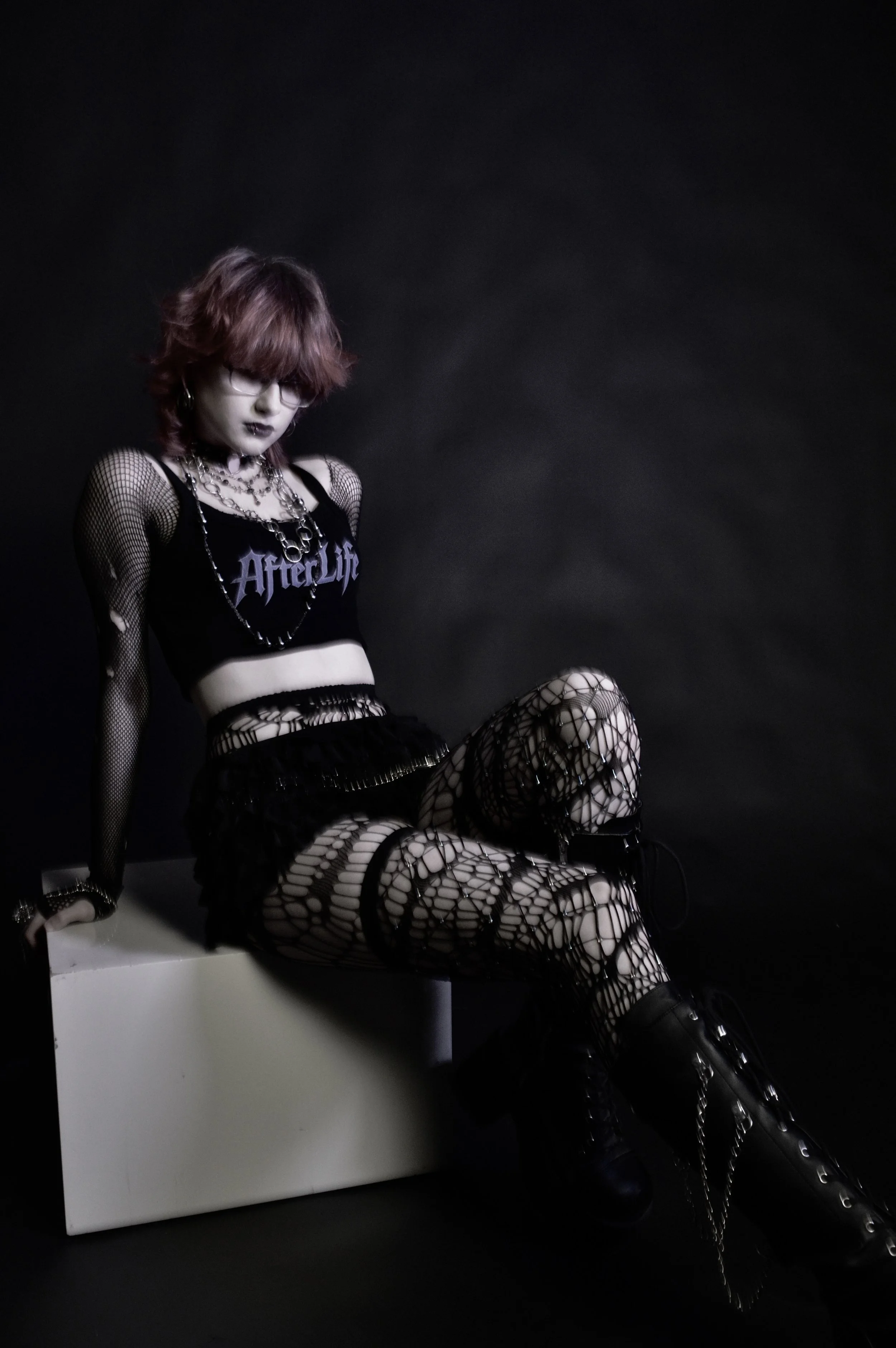

Mesh
What could be sexier than a fabric that bares it all? Mesh fabrics, unlike lace, started in lingerie; primarily corsetry and pantyhose/stockings. This dug the sexual connotations of the fabrics deep. Wearing them on the outside was, like leather, popularized by rebellious subcultures like goth. They covered their arms, legs, and chests in mesh fabrics, often ripped and tattered. It wasn’t uncommon in goth spaces for men to wear mesh shirts with nothing but a jacket or blazer over them. The ‘90s and 2000s saw this expand as it was viewed as less extreme. Mesh, fishnets and whatnot got popular with skater kids, emos, mall goths, artists, etc., and leaked into the mainstream from there. In 2026, nobody bats an eye if you go out with fishnet tights and shorts, but not long ago, it was massively taboo.
Mesh is kind of like satin’s sexier cousin. It can drape and shine the same, but it's usually tighter and more revealing, often made specifically as forms of lingerie. It's sensual, rebellious, feminine, playful, and confident.
The next time you watch a movie and spot a character who wears these fabrics, see if you can predict their role in the movie. When you need to feel powerful, throw on the leather jacket. If you need to feel sexy and feminine, reach for the lace and satin. If you need a little bit of sexy edge in an outfit, find a mesh top or tights. Use the social connotations of these fabrics to your advantage, and love these fabrics the way all of history has.