Between Realms
Written by Rein Stepien
Photography by Luke Chipley
Modeled by Kadence Schaecher, Liz Eike, Rachael Mueller, Dani Harris, and Cade Johnson
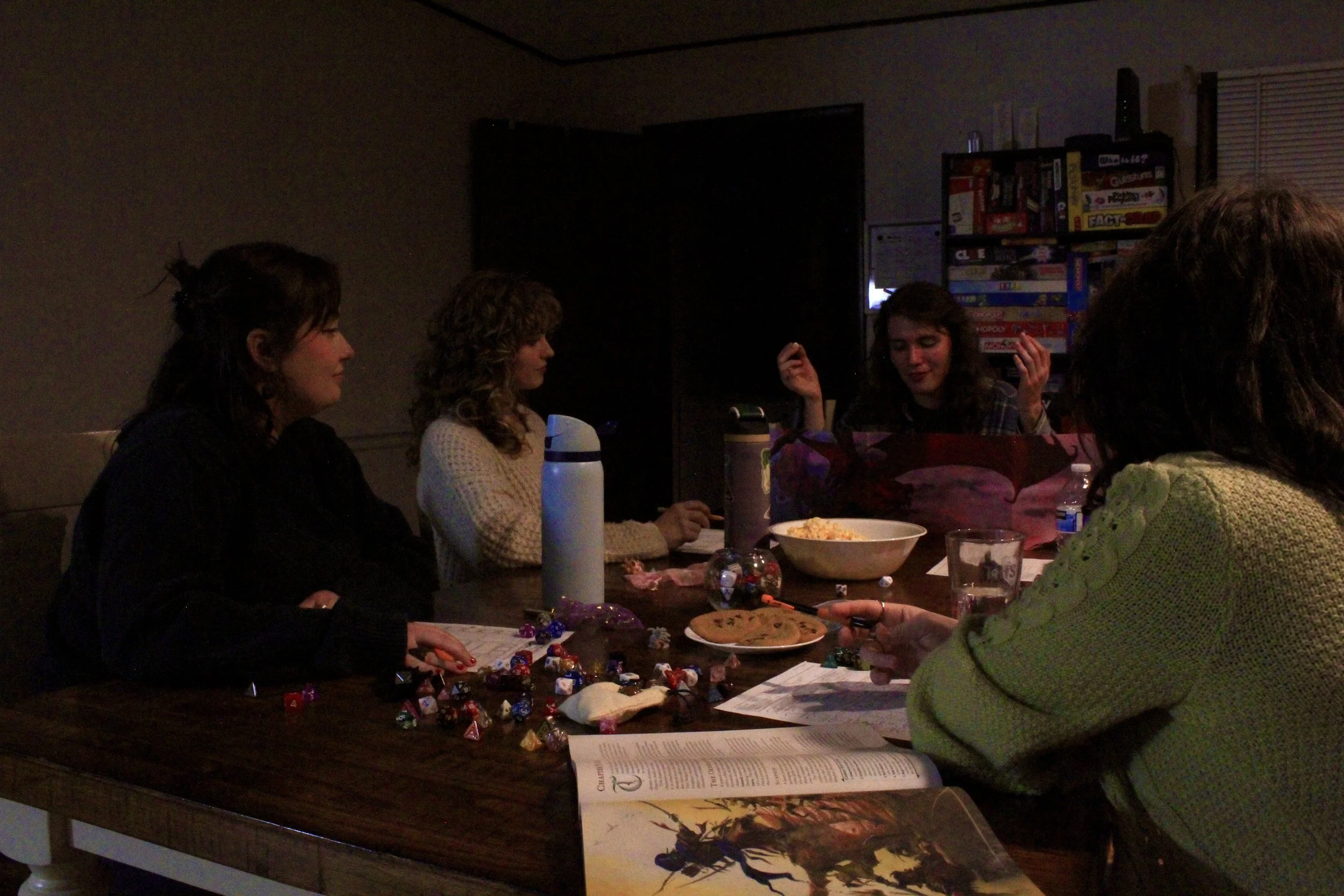
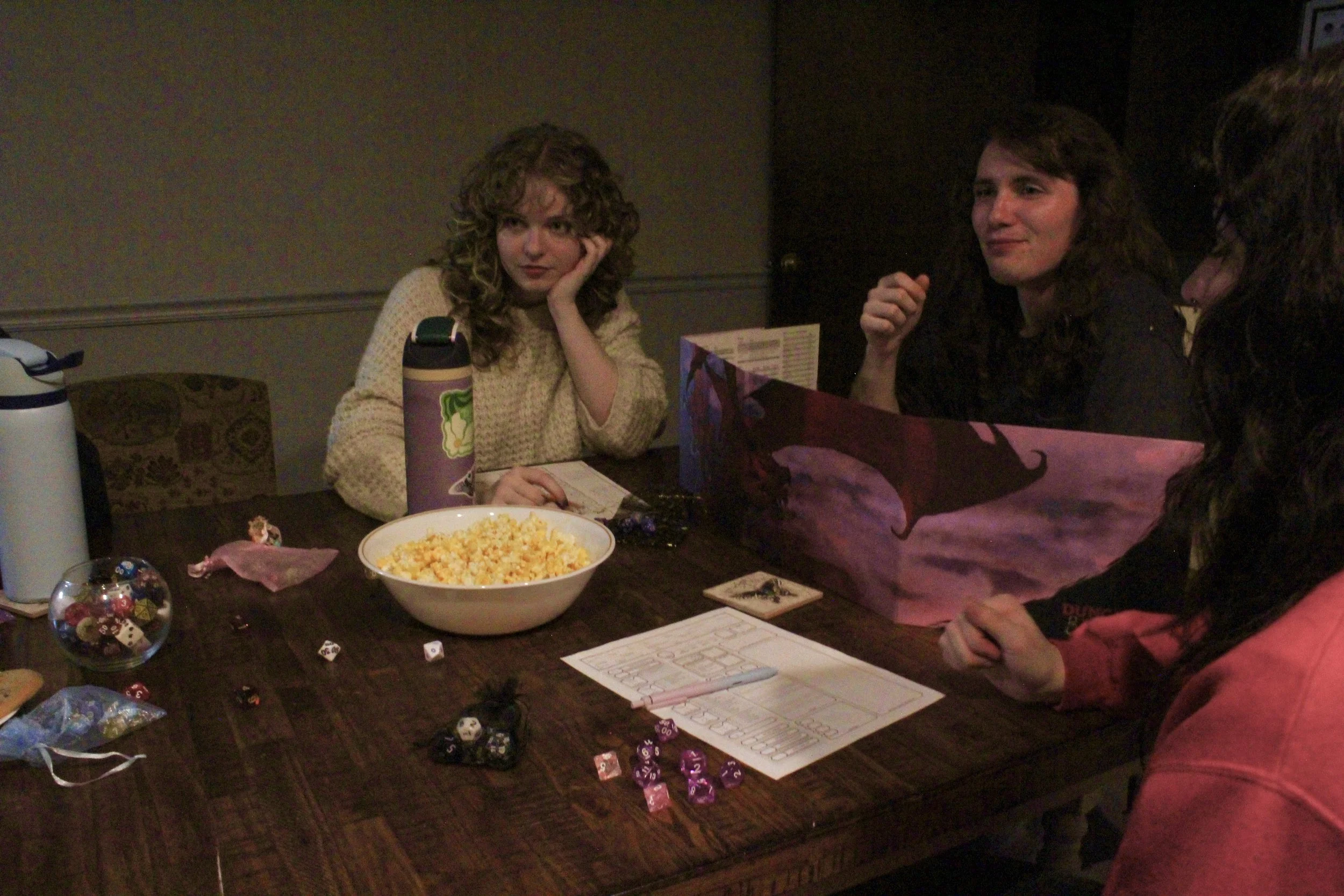
In any classic college movie, the average student’s nightlife consists of one thing: parties, with the key aspect being going out with friends to make poor decisions in a loud, and sometimes dangerous environment. However, for many, the party they are more concerned with is their Dungeons & Dragons party. Finally aligning schedules to make poor decisions in a loud living room, and take down dangerous figurine enemies. While both activities have distinct stereotypes, the participants of either one overlap much more than you would initially think.
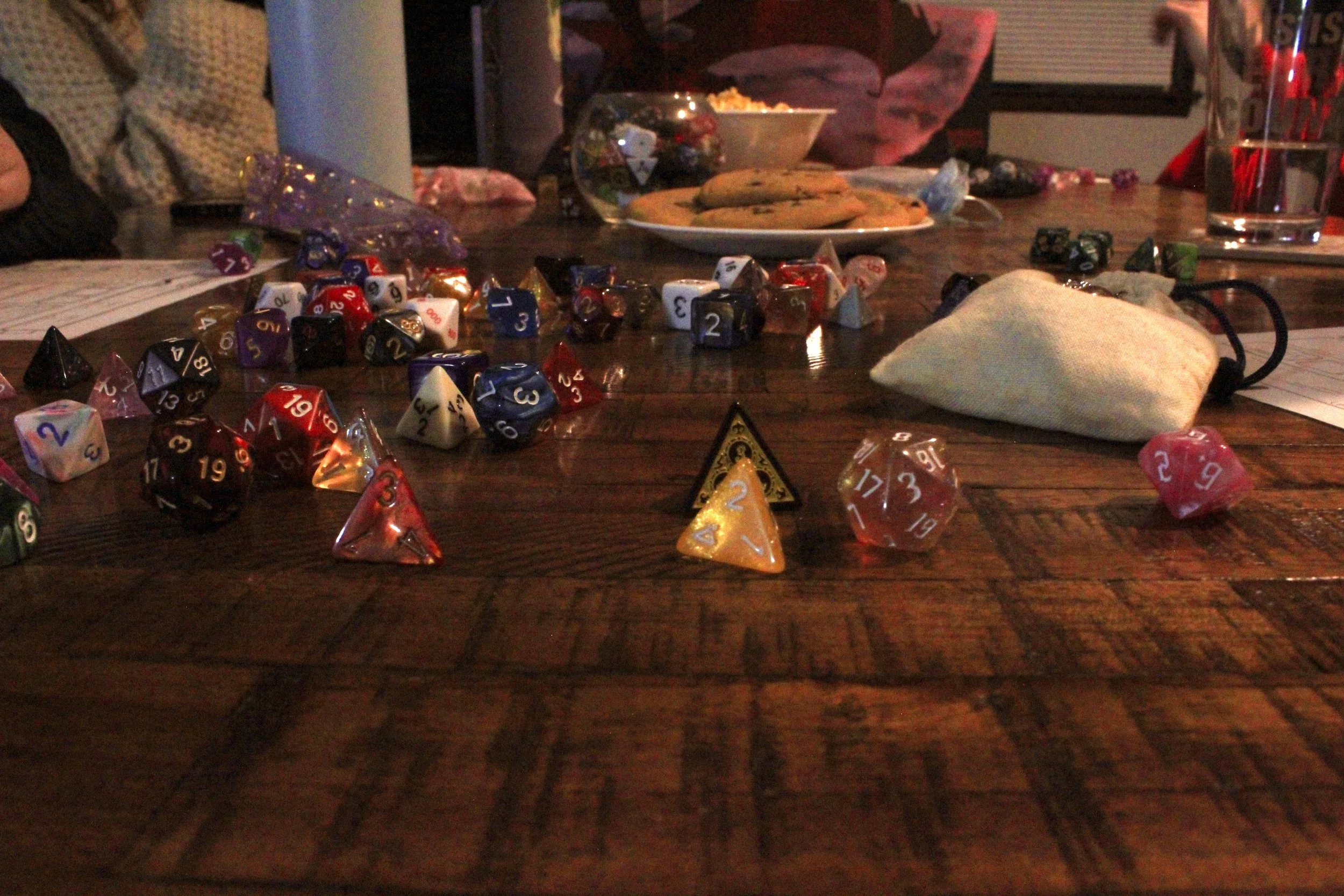
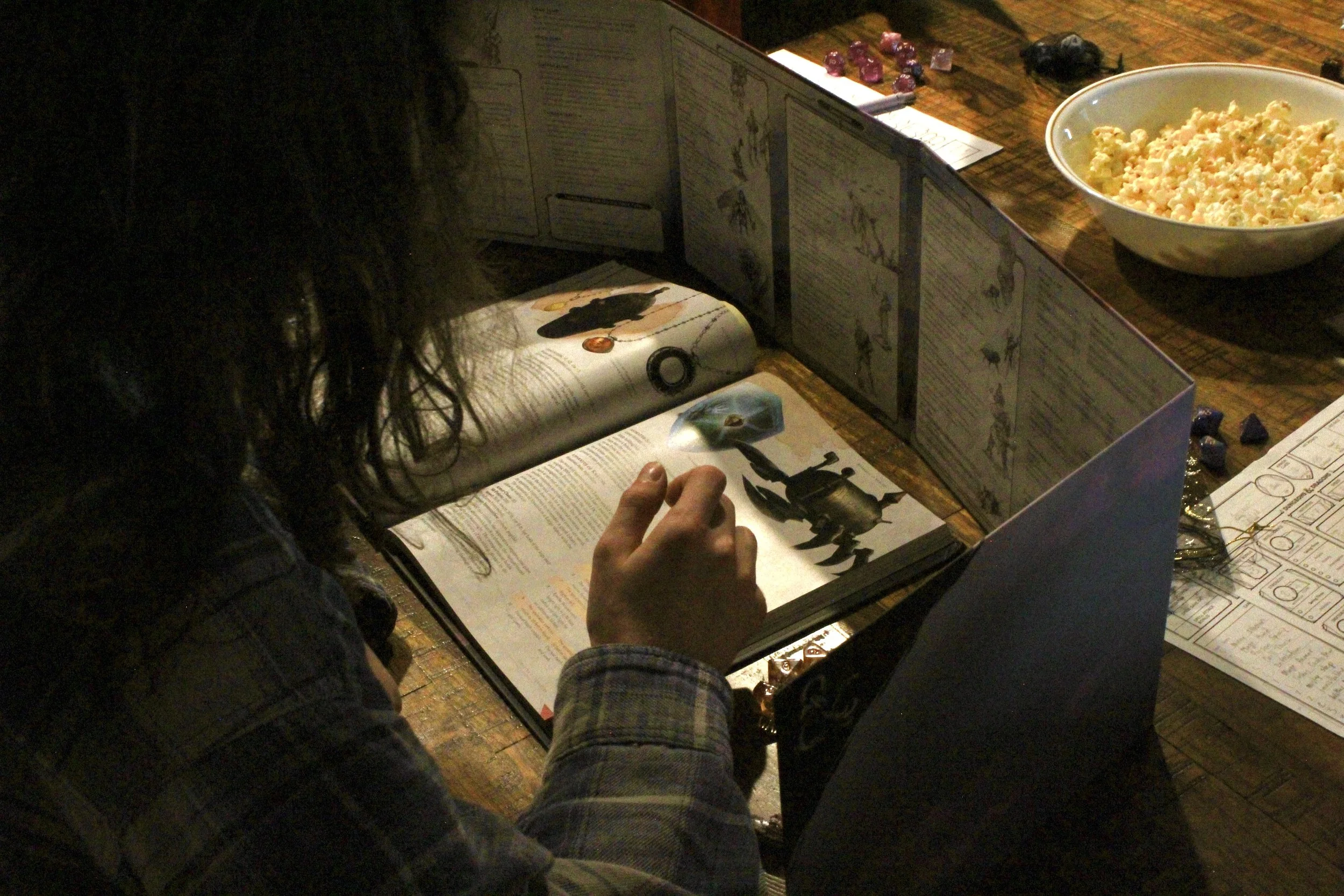
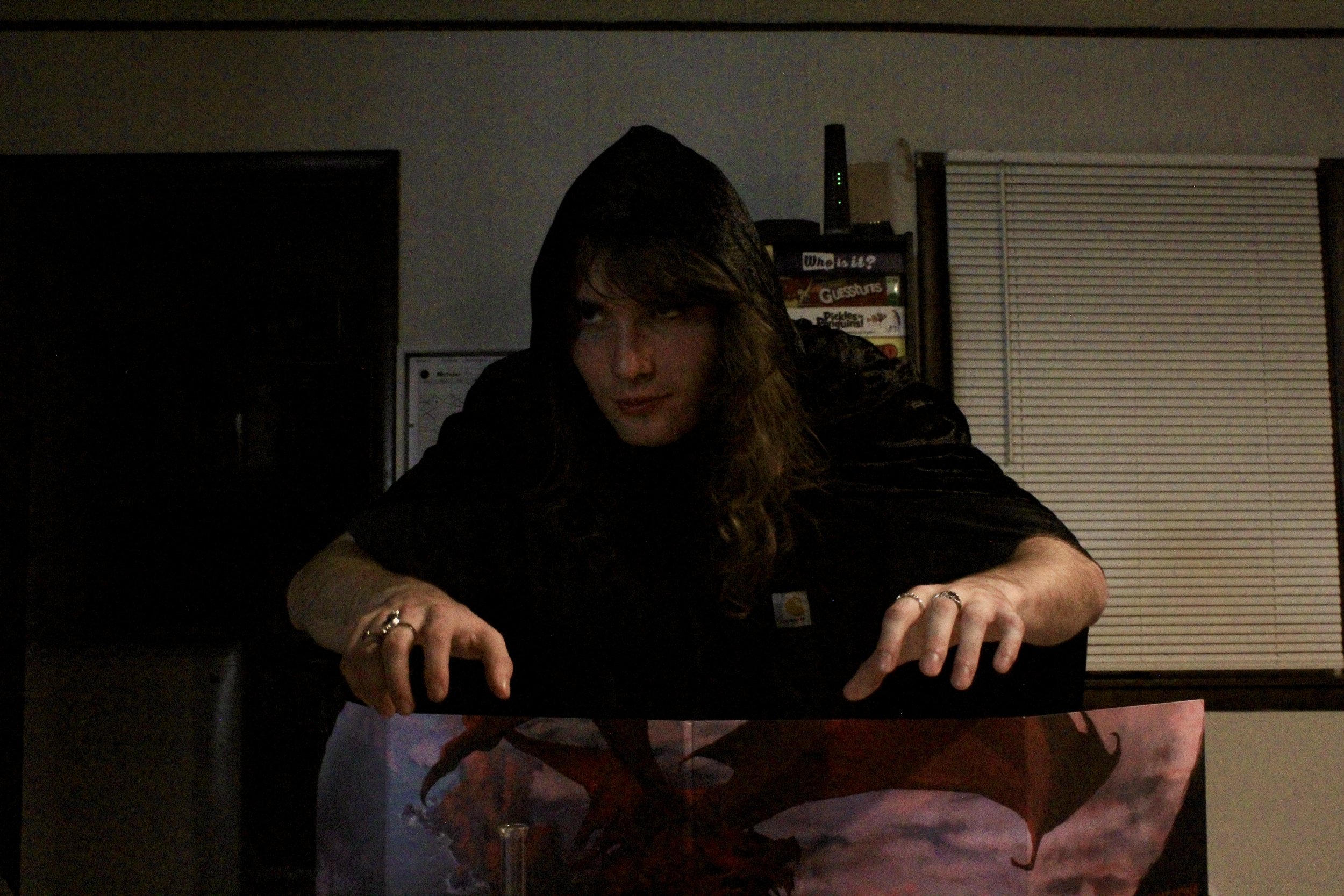
Dungeons & Dragons–abbreviated as D&D–is a fantasy tabletop role-playing game (TTRPG). The game consists of a Dungeon Master (DM) and as many players as they can handle. Each player controls their own character, using a seven-piece dice set. The DM serves as a storyteller and judge of what can or cannot happen during the game. The DM sets up a scenario, then a player makes a choice, rolls a dice corresponding to the action, adds their ability score modifier and bonuses, then the DM decides if and how that action plays out based on the number rolled. That is a watered-down pattern the game follows through a story that the DM either follows from a pre-written campaign or one of their own creation.
The game first came out in 1974, with a multitude of editions released over time. These editions are denoted with what iteration they are (1, 2, 3.5, etc.) and the letter ‘E’ for edition. The most recent being 5.5E in 2024.
In the past decade, the popularity of D&D has been on a constant increase. Prior to the spike, favor was wavering as people had mixed feelings on 4E after the high expectations set by 3.5E. Then in 2014, 5E came out, leading to a boost in popularity. D&D podcasts emerged and gained significant amounts of listeners, like The Adventure Zone created in 2014 and Critical Role in 2015. Even amongst these legendary shows still running strong, neither would have had as great an effect as the release of the 2016 Netflix original series, Stranger Things. Stranger Things is a sci-fi drama where the main characters use D&D terminology to understand the phenomenon happening around them. This show would bring a more mainstream audience to the nerdy, heavily stereotyped roleplaying game, thus heavily diversifying the mostly cisgender, straight male audience to a more even playing field.
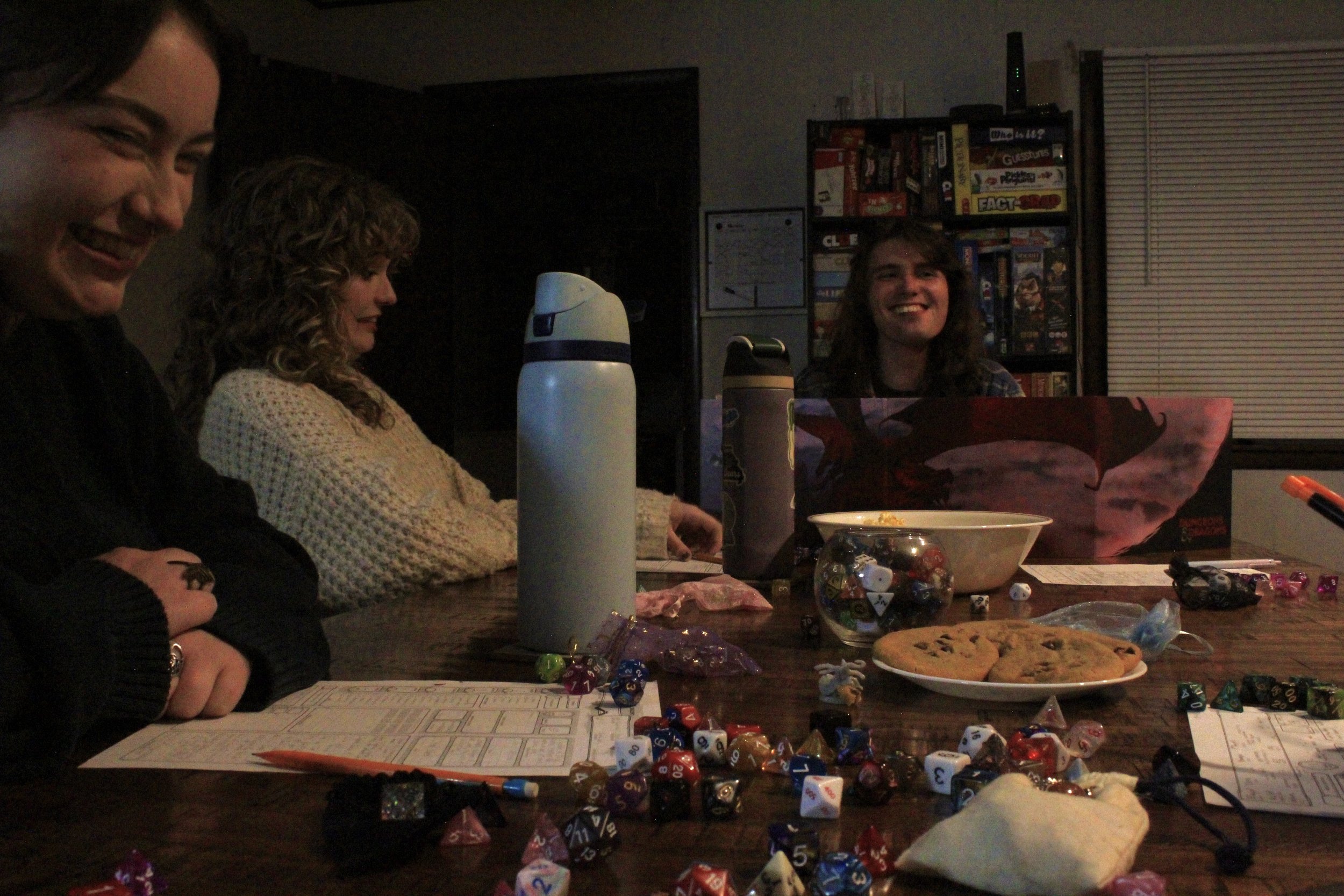
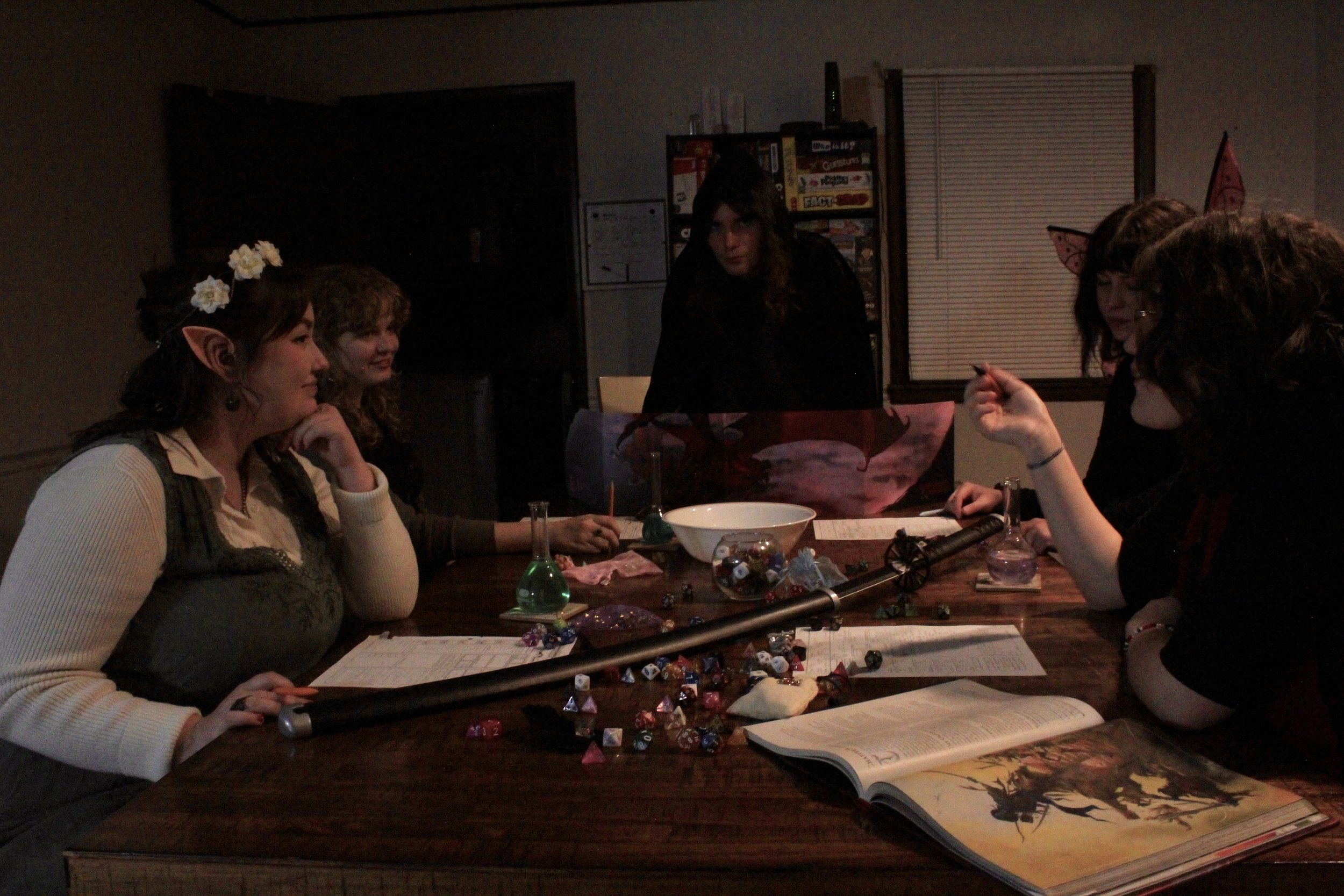
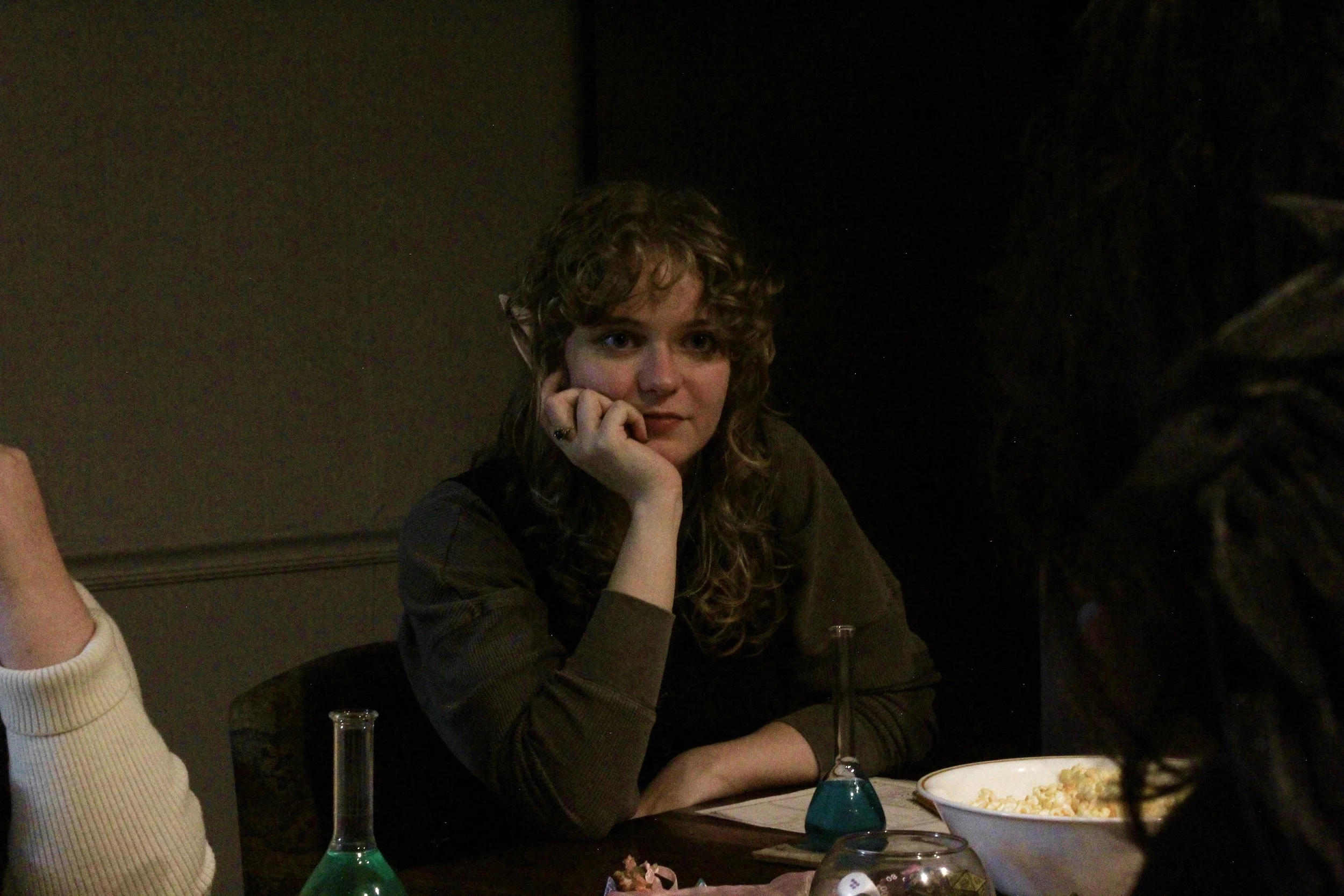
A combination of the curiosity from watchers of Stranger Things and the large D&D podcast fandom space on social media sites like Tumblr, had developed into a surge of D&D players. In 2021, Wizards of the Coast, the D&D publishers, released an infographic on player demographics. They found that there was a gender distribution of 60% men, 40% women, and <1% nonbinary/other gender identities. This ratio aligns with my own group, having 3 women and 4 men. When the box of who played D&D started to be lifted, it allowed everyone to jump into the hobby.
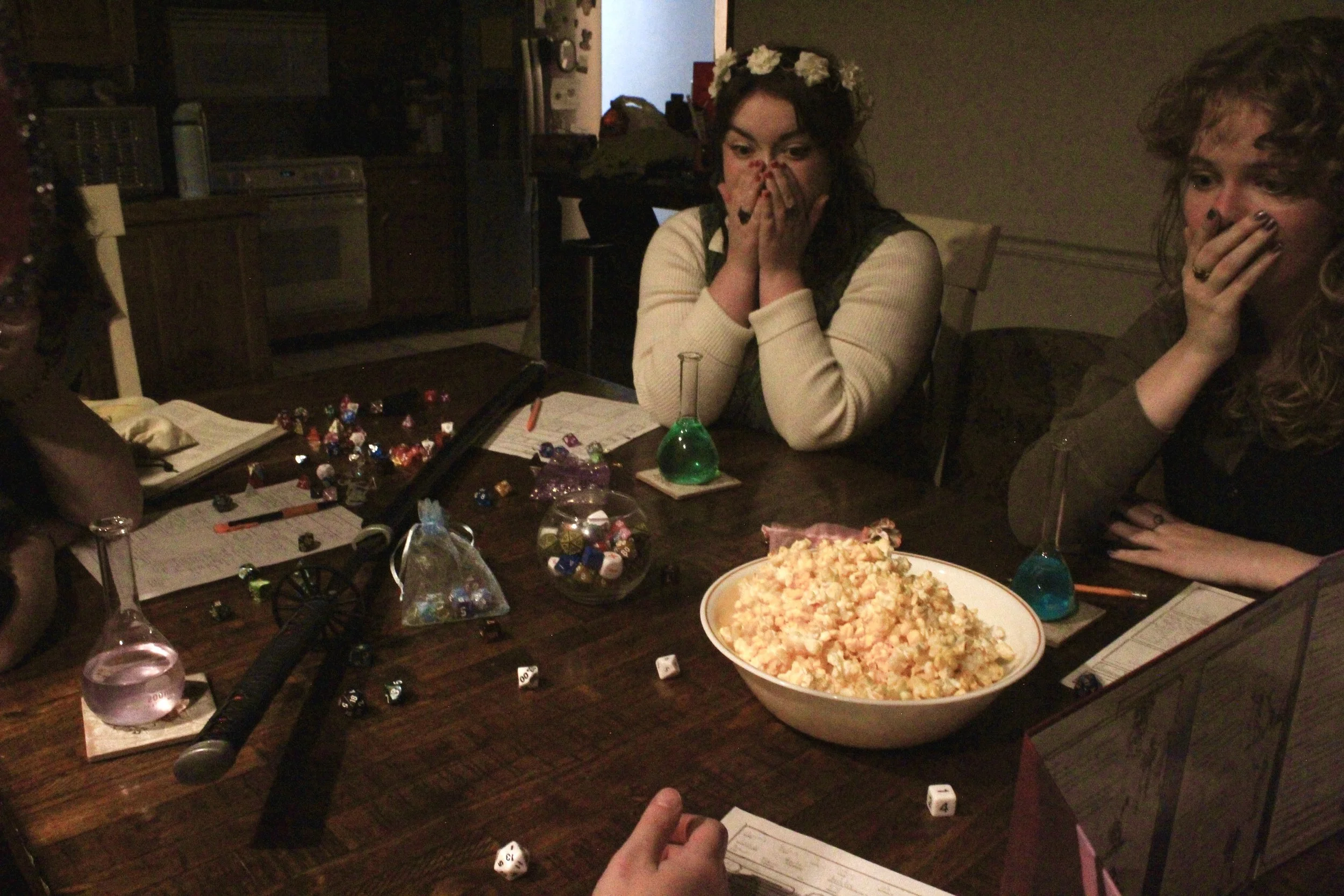
It is a game that allows people to escape reality like any other; all you need is a bit of creativity. The community is immensely welcoming, and upon a mention that you may be interested in playing will shower you in free resources. Once the hurdle of character creation has passed, finding a group that aligns with your play style is the next level. If battles don’t appeal to you, there are DMs who prefer to run stories that focus on roleplaying, the same vice versa. Whatever player you are, there are others just like you. The best methods as to how to find them are to force your friends to play, ask a local game store if they are hosting any one-shot events or groups, and check out your school’s TTRPG club. That is not even to mention the possibility of online parties.
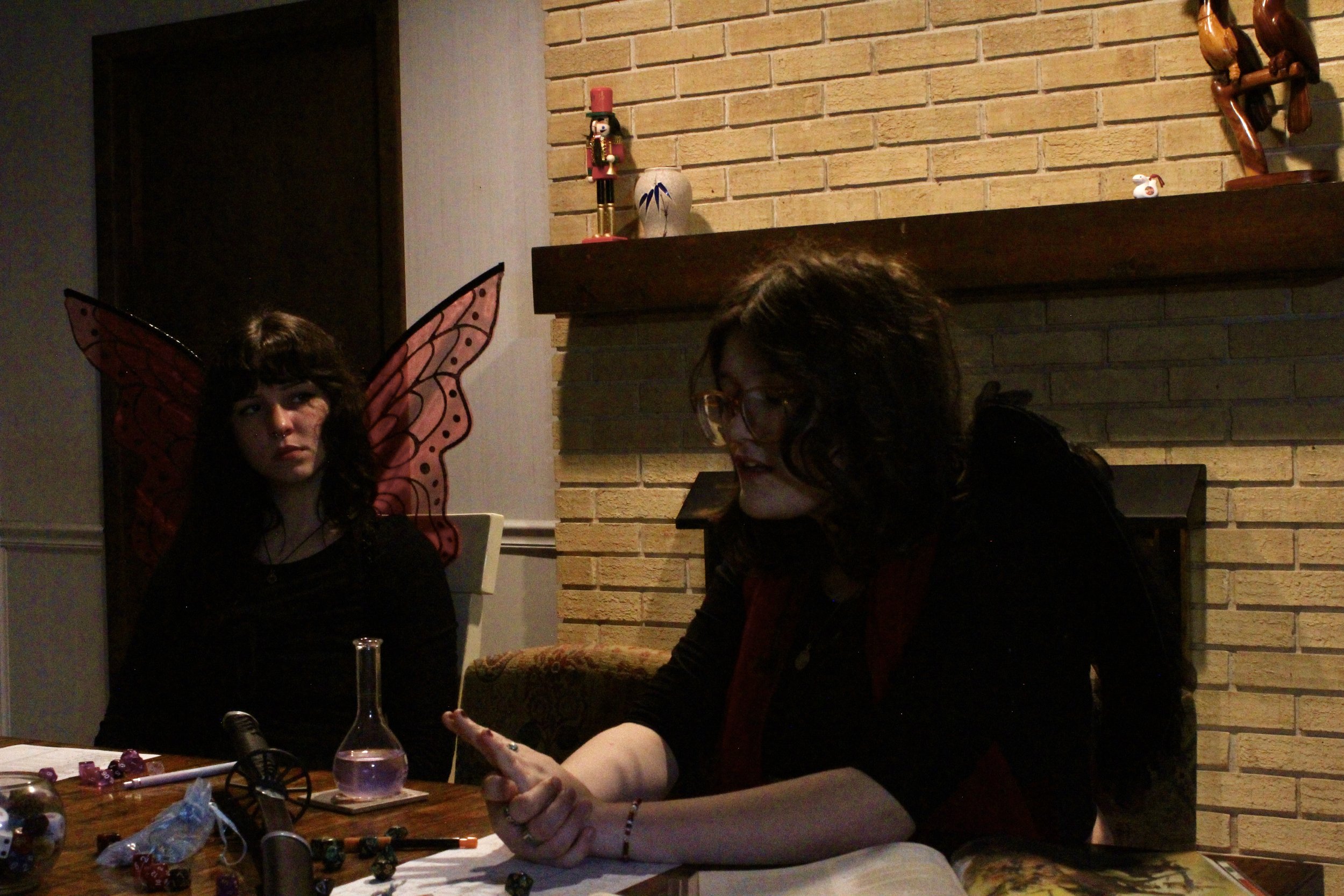
Dungeons and Dragons is for everyone. The group of party animals dancing in the club at 1 a.m. may have been fighting a dragon just a few hours before. The no-nonsense valedictorian who aces every test may also study the best build for their halfling bard to ensure they can seduce every enemy. There is no blueprint for who can enjoy D&D. It is an experience that is what you make it. If you go in with an open mind and let go of the fear of being cringe, you can create unforgettable memories. So come up with a silly personality and use the power of Google and your imagination to make your first character.