The Cultural Journey of Tooth Accessories
Written and Photographed By: Madi Gutezkow
Modeled By: Donte Pringle and Avery O’Neal
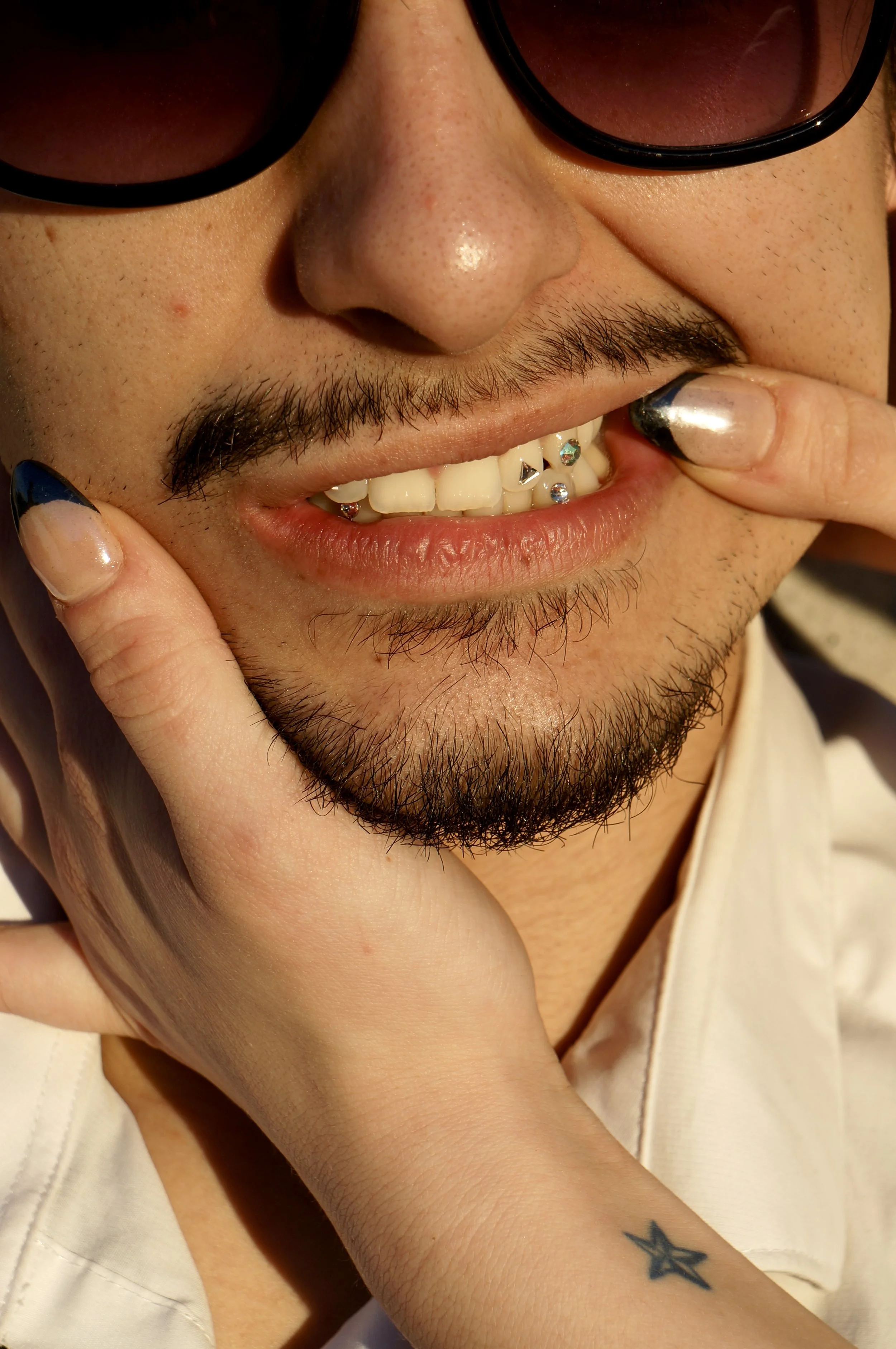
Recycled trends are nothing new in today's fashion limelight. The Y2K and 90s aesthetics have taken over in recent years with many trends such as crop tops, low-rise jeans, and platform shoes. One very popular, semi-permanent trend from the early '90s and '00s era that has made its way to the present is tooth gems.

Although gaining modern traction with people like FKA Twigs rocking the style, tooth gems have a long historical significance. Dating back to Mesoamerica, Mayan and Aztec cultures bore holes in their teeth to add gems. These gems were adorned as an aesthetic choice as well as a status symbol. In Italy during the Roman Empire, women would have teeth removed to fit gold bands in their mouths. With gold being a soft metal, this placement was not used as a dental tool but purely for decoration. In 16th century India, gold and silver tooth jewelry was worn by the bride on the wedding day to show beauty and influence.
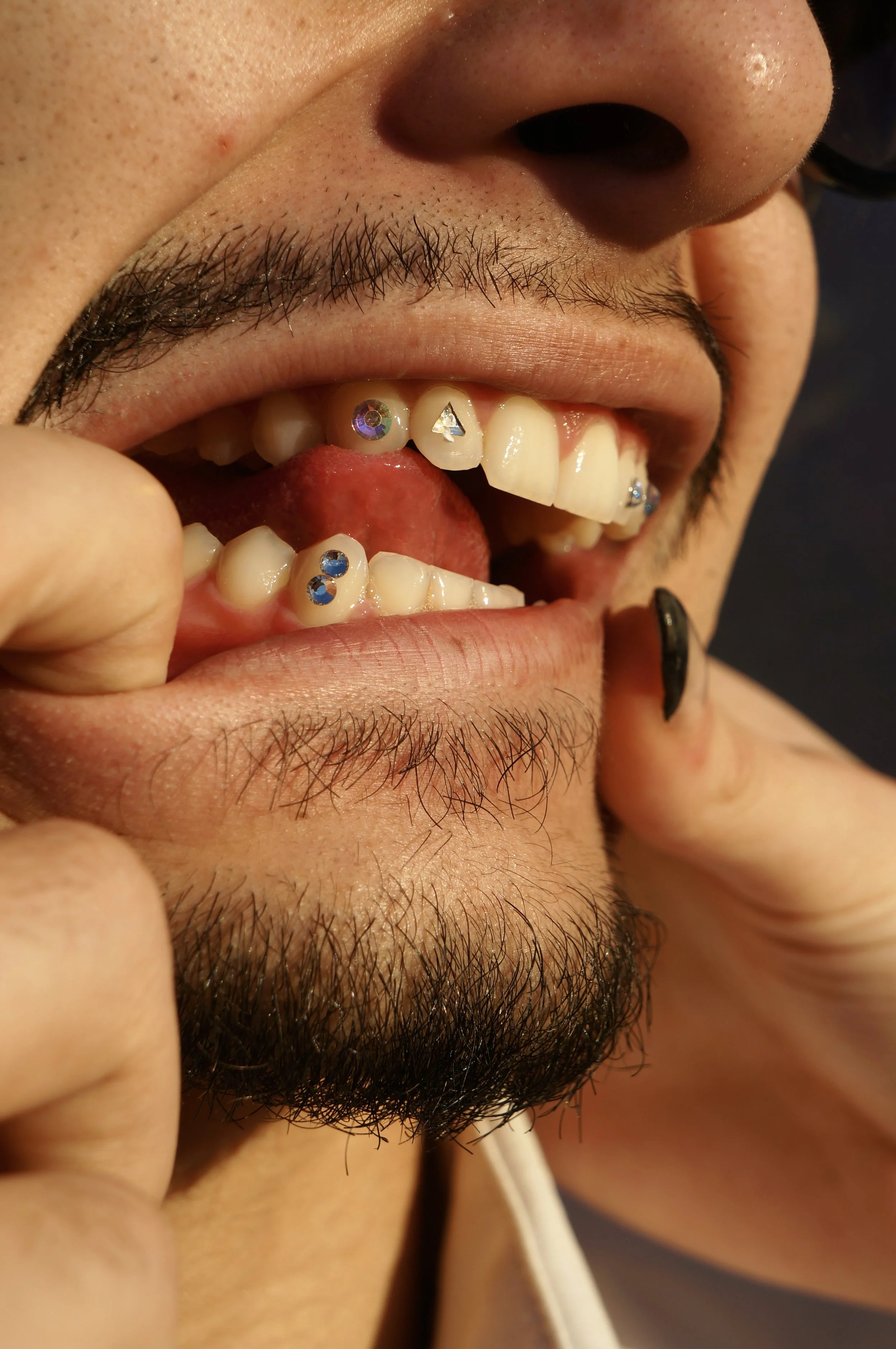
In the United States, the original uptick in the tooth jewelry trend came from Indian immigrants moving to predominantly Black neighborhoods in the 1970s. Grills, or a tooth covering of silver or gold encrusted with gems, were made to snap over the teeth to be worn periodically. This was a pricier but less permanent display of tooth jewels. In 1975, singer Grace Jones brought grills into high fashion by appearing on the cover of Vogue Hommes with solid gold grills on her top and bottom teeth. In the 1980s, Eddie Plein, a dental student, was selling grills out of a pawn shop when rapper Just-Ice purchased a pair, and the hip-hop scene was soon flooded with the adornment. In 1992, Plein opened a store in Atlanta where artists like Lil Jon and Ludacris purchased grills fully decked out with crystals. In 2005, rap artist Nelly released the song “Grillz,” showcasing the accessory and sweeping the nation. This led to tooth accessories leaving the rap and hip-hop sphere and carrying over into pop. Artists like Katy Perry and Miley Cyrus have been pictured wearing grills. In fact, Katy Perry won a Guinness World Record for the most expensive grill in 2014 in her music video for the song “Dark Horse.”

Since expensive grills were adored by everyday people, there was a need for a cheaper alternative. In the 1990s, dentists advertised ways to decorate teeth in a more cost-effective way. They applied gems or plates of gold using the same dental adhesive that was used in the application of braces. This application process made the tooth gems semi-permanent but still effective enough that they wouldn’t fall out on their own. Recently, celebrities like Billie Eilish have sported tooth gems. At home, DIY tooth gem kits coming from various brands have surfaced in recent years. Gemeez is by far the most popular brand, garnering over 150,000 followers on TikTok and endorsement from various influencers. New-age tooth gems stray away from expensive metals and diamonds and move toward plastic gems.

The re-emergence of tooth gems is a testament to fashion’s cyclical nature and its ability to blend modern aesthetics with historical traditions. What began as a symbol of beauty and status in ancient cultures has been reinterpreted across various eras and social contexts, from the hip-hop scene to high fashion. Today, with the influence of social media, celebrity endorsements, and cheaper alternative materials, tooth gems have become an accessible and versatile way to make a personal style statement. This modern revival shows that even the smallest details, like tooth jewelry, can carry a rich cultural significance and remain relevant across time.